
Google has introduced Lyria 3, marking its most capable music-making AI so far, and made it available directly through the Gemini mobile app. Anyone over the age of 18 can now open Gemini, describe the kind of song they have in mind, and receive a fresh 30-second track complete with vocals and lyrics.
You might also upload a photo or a brief video clip and request an original soundtrack that matches the mood or scene perfectly. The technology comes from the DeepMind division inside Google, a team dedicated to major AI breakthroughs.
Access to Lyria 3 began rolling out on the morning of February 18. For casual inspiration, the company points to quick ideas such as crafting a custom birthday melody or inventing lyrics that your pet might “sing” about you.
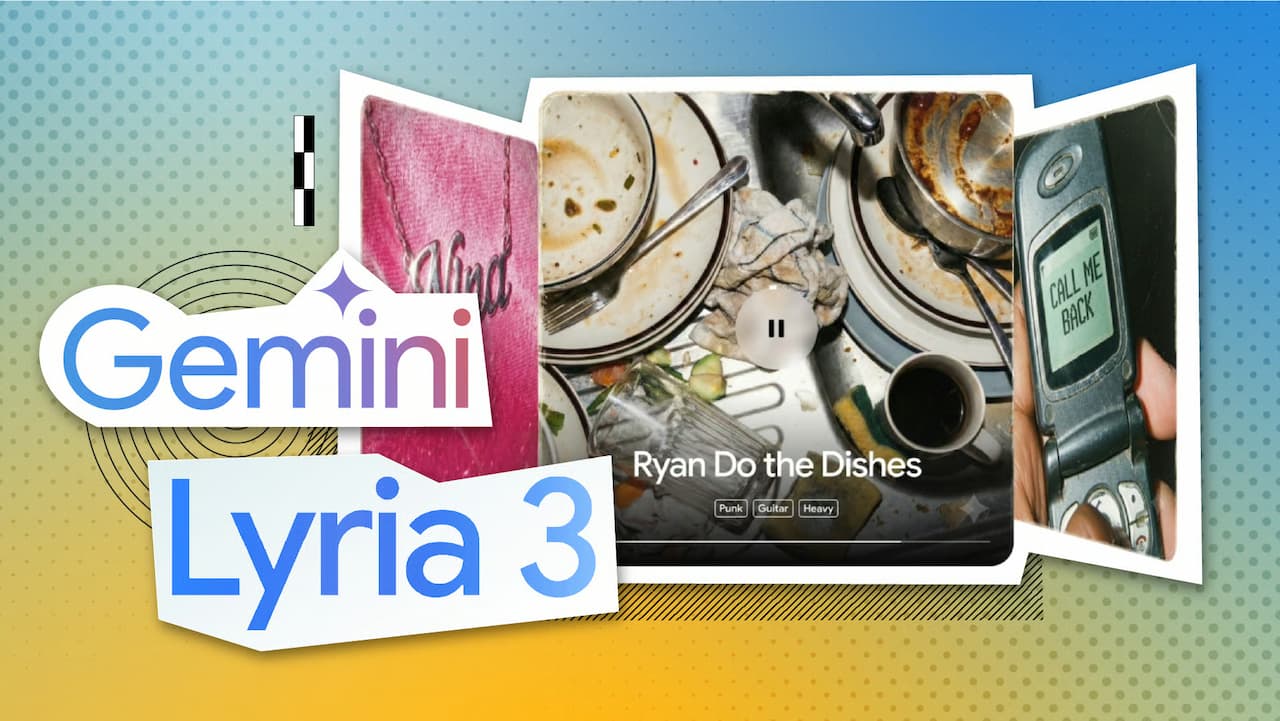
At launch, the tool handles creation in English plus German, Spanish, French, Hindi, Japanese, Korean, and Portuguese. Google has not disclosed the precise training data or methods used for Lyria 3, yet it emphasizes close collaboration with musicians and strict attention to copyright and licensing agreements.
Industry insiders indicate the company relied exclusively on audio licensed through YouTube user terms, existing label deals, and other approved sources.
Reports from a few years earlier mentioned that Google experimented with copyrighted recordings during early development stages before securing formal permissions from rights holders.
Compared with previous iterations, Lyria 3 stands out for generating complete, coherent lyrics on its own, offering greater control over tempo, emotion, and structure, and delivering tracks that feel more polished, layered, and lifelike.
It builds directly on the foundation of Lyria 2, the model already powering YouTube’s Speech-to-Song feature that converts spoken audio into melodic singing for Shorts.
Google stresses that the primary goal remains lighthearted personal expression rather than professional-grade production. Leaders from both the Gemini and DeepMind music teams explained that the focus lies on giving users an easy, enjoyable way to turn thoughts and feelings into sound, not on competing with commercial studios.
Outside the Gemini interface, Lyria 3 now also supports YouTube’s Dream Track tool. Originally launched in 2023, Dream Track helped Shorts creators add AI-generated music and initially launched only in the US before expanding to additional regions.
The first version featured synthetic voices modeled after select artists such as Charlie Puth, T-Pain, and Alec Benjamin, all of whom opted in. The current update moves away from replicating specific performers and instead emphasizes brand-new vocal performances and instrumentation.
This change follows YouTube’s earlier introduction of Music Assistant within its Creator Music library earlier this year. That feature allows eligible channel partners to generate royalty-free instrumental backgrounds simply by typing a description.
Google continues to underline that Lyria 3 exists to boost individual imagination and deliberately avoids mimicking real-world musicians.
When a prompt names a particular artist, the system interprets it as a stylistic hint rather than a request for imitation and creates an original piece inspired by that direction. Built-in safeguards scan outputs against known copyrighted material, and users can report anything that appears to infringe.
All generated audio carries an invisible SynthID watermark developed by Google, making it identifiable as AI-created content. Additionally, users can now upload ordinary sound files into Gemini to check whether they contain traces of Google’s music-generation technology.
The release comes shortly after Universal Music Group and YouTube finalized a partnership agreement in October of the previous year. Under that deal, as described by UMG chairman Sir Lucian Grainge, stronger protections were established for artists and songwriters in relation to AI-generated material.
Other Stories You May Like