
Pop star Taylor Swift recently submitted three trademark requests aimed at safeguarding both her appearance and her voice from unauthorized use. One application focuses on a famous picture of her performing with a pink guitar on stage during her hugely successful Eras tour. The other two are sound trademarks for the simple spoken lines “Hey, it’s Taylor Swift” and “Hey, it’s Taylor.”
This action arrives at a time when artificial intelligence is making it easier than ever to create convincing fake videos and audio of famous people. Deepfakes now appear everywhere on social platforms.
Ordinary people can suffer when their faces are misused in fake content, and celebrities face extra risks including explicit material and fake advertisements claiming they support certain products or services.
According to a fresh study released by AI detection firm Copyleaks, Taylor Swift along with several other well-known personalities have had their faces and voices used in misleading sponsored videos on TikTok.
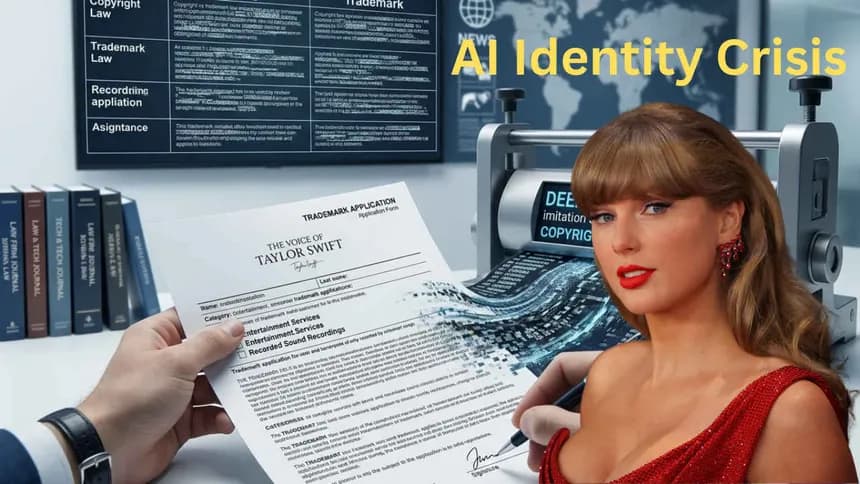
These ads appear to promote services that could be fake or even harmful. The videos use realistic voices and special filters to hide the fact that they are computer-generated.
In these misleading clips, the AI versions of Swift, Rihanna, Kim Kardashian and others are shown in typical interview-style settings such as red carpet appearances or television talk shows.
Instead of talking about their careers or personal lives, the deepfaked stars enthusiastically describe special reward programs that supposedly pay TikTok users simply for giving feedback on videos they watch.
One such video features a fake Taylor Swift who says she recently learned about a new testing feature called TikTok Pay. She explains that some lucky users are being chosen to watch certain videos and share their opinions.
The deepfake encourages people to check whether they qualify for this limited program and tells them not to hesitate if the page appears on their screen.
Anyone who follows the instructions in the ad gets accepted immediately into the program. Users are then taken to an outside website that looks connected to TikTok but is actually built using another AI tool called Lovable. Once there, the site starts asking visitors to enter their personal details and information.
It remains unclear exactly how the people behind these ads plan to use all the collected personal data. However, advertisements that use similar tricks to steal information have become very widespread across social media.
Recently, a consumer protection group filed a lawsuit against Meta for allowing scam ads to run on Facebook and Instagram. The US Federal Trade Commission also warned this week that scams originating on social platforms have increased sharply.
With these kinds of fraudulent activities growing more advanced every day, it makes perfect sense that Taylor Swift and other major stars are now taking strong legal measures to protect their names and images from being misused in this shady online economy.
Other Stories You May Like